01
The shofar
A ram's horn sounded in the synagogue — about a hundred blasts (tekiah, shevarim, teruah). Its voice is a call to awaken and return to good.
Customs
The holiday's customs are full of meaning: every sound and every dish is a wish for a good, sweet and meaningful year.
A ram's horn sounded in the synagogue — about a hundred blasts (tekiah, shevarim, teruah). Its voice is a call to awaken and return to good.
An apple is dipped in honey with a wish to the Almighty for “a sweet new year.” The holiday's best-known symbol.
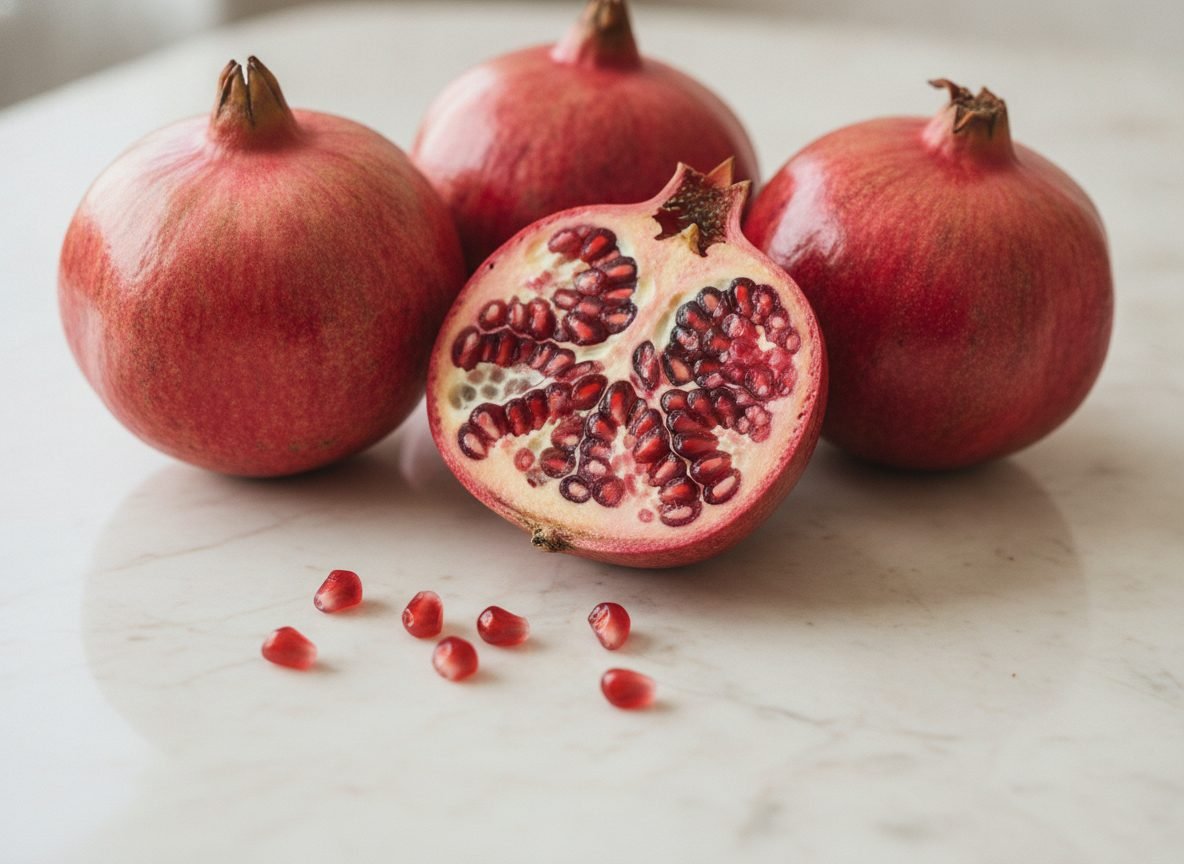
By tradition the pomegranate holds 613 seeds — as many as the commandments. It is eaten with a wish for just as many good deeds.
Special “signs” on the table — the head of a fish or ram (“to be a head, not a tail”), dates, gourd, beet, leek — each with a short blessing.
At flowing water a prayer is said and sins are symbolically “cast” into a river or sea — a rite of inner cleansing.
People wish one another “Shanah tovah u'metukah” — a good and sweet year — and “L'shanah tovah tikatevu” (“may you be inscribed for a good year”).